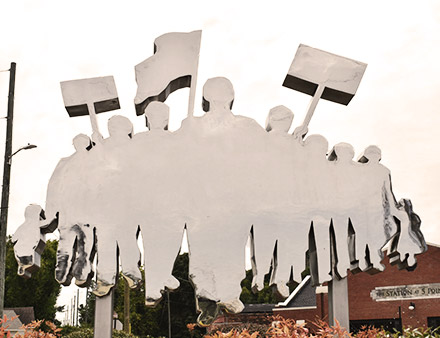
The Black Belt in History
The region now referred to as “The Black Belt” is a part of what is geographically known as the Black Belt Prairie Region and is one of the most geologically and biologically distinct and diverse regions in the Coastal Plains of North America. The area includes counties such as Perry, Dallas, Lowndes, Montgomery, and Macon.
The Black Belt has a history of exploitation, but also a history of a determined people and a legendary place. Before this history was recorded in books, people shared it by word of mouth. Like the river and streams that run through it, or the quilts of its celebrated Gees Bend, the history of the Black Belt region is multi-faceted. Many individual stories, of people and places, contribute to what we now call a movement. The movement for Civil Rights equality.
Learn More
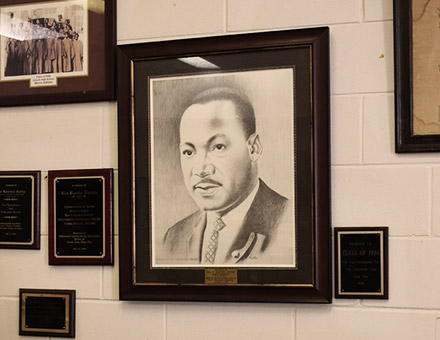
Change Demands Voting Rights
After the Civil War, a number of Alabama’s white citizens struggled with how to deal with Reconstruction and freed slaves, and how this affected the agricultural economy. The passing of Jim Crow laws, implementation of sharecropping and the enforcement of segregation allowed a structure similar to pre-emancipation to exist.
In many communities in the Black Belt, African Americans made up the majority of the population. They understandably wanted their interests to be represented by and reflected in governance. The growing push for voting rights would threaten the status quo, setting the stage for substantive change.
Learn More
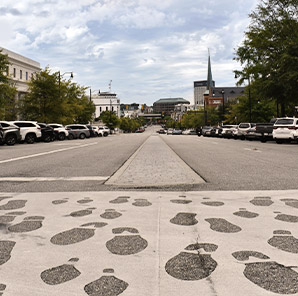
A Larger Movement Toward Civil Rights
As events, particularly in the Black Belt region, unfolded during the 1950s and 1960s, national and international attention began to focus on those striving to make their voices heard. Inequalities went far beyond the denied right to vote, and the enforcement of Jim Crow laws by increasing violence shook millions out of complacency.
Leaders stepped up to meet the challenge, and mobilized thousands in nonviolent response that helped change minds, hearts, and history. Today this span of time is rightly known as The Civil Rights Era, and its impact continues to be felt more than half a century later.
Learn More