Located in east central Alabama as part of the Black Belt region, Perry County is home to Marion (known as “The College City”), Perry Lakes Park, part of the Talladega National Forest, and Marion Military Institute. While steeped in history, the county is forward-focused, inviting new residents, new businesses, and visitors alike to enjoy the friendly atmosphere, rural character, and growing economy of the area.
People Who Shaped Perry County
Mrs. Coretta Scott King was born on April 27, 1927, to Obadiah Scott and Bernice Scott. Mrs. King grew up in Marion, AL where she attended Lincoln Normal School and graduated Valedictorian of her class. Mrs. King was known throughout the community of Marion for being smart, elegant, and being amazingly gifted in her musical talents. Mrs. King was nurtured by her loving family, her community and the teachers and student body at Lincoln Normal. Mrs. King would go on to graduate from college and returned to the Black Belt in 1954 to live in Montgomery with her new husband Dr. Martin Luther King Jr.
While in college in Boston in January 1952, MA she would meet a young doctoral student in Martin Luther King Jr, they would be married in Marion, AL June 18, 1953. Mrs. Coretta Scott King would be one of the first victims of the Montgomery Bus Boycott. While at home with her 3-month-old daughter, a bomb would go off on her doorstep. Mrs. King was a pioneer in the Civil Rights Movement, being there from the very first day on Dec. 5, 1955, she would spend the rest of her life fighting for truth and justice wherever it was found, becoming one of the most admired women in the world. Mrs. King is a proud daughter of the Black Belt and one of its most famous citizens.
Civil Rights activist and organizer Rev. James Orange was an assistant to Dr. King, and marched with Ralph Abernathy and King in Atlanta. He came to the Black Belt to help register African Americans to vote. He was jailed in Marion, charged with “contributing to the delinquency of minors” for helping organize school-aged protests for the right to vote.
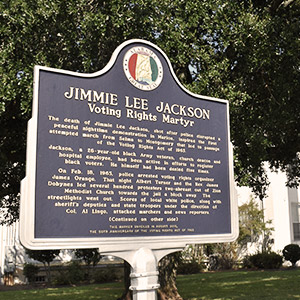
Jimmie Lee Jackson (1938-1965) was a United States Army Veteran, and a graduate of Lincoln Normal School, who lived in Marion, Alabama. Like many Veterans, Mr. Jackson was a proud man and believed he should have the right to vote as anyone else. On the night of February 18, 1965, after a mass meeting at Zion Church, marchers were brutally attacked and during the resulting chaos, Mr. Jackson was shot, he would die 8 days later, Dr. Martin Luther King, Jr would eulogize Mr. Jackson. Community members were measured in their response to the murder of Mr. Jackson, someone suggested they take the body of Mr. Jackson to Montgomery, the idea of the Selma to Montgomery march was born out of the tragic death of Mr. Jackson. He is buried at Heard Cemetery in Marion.
The Childs, a prominent family in Perry County, are descendants of formerly enslaved people in the region. The family owned and operated several businesses including a grocery and bakery. Norman Lorenzo Childs, Sr. and his wife Idella Jones Childs had five children, including Jean Childs, educated at Lincoln Normal and married to Andrew Young, who was pastor of First Congregational Church, and later was a congressman and ambassador to the United Nations.
Dr. Janette Howard-Moore was born to cotton farmers James and Marie Howard of Marion, AL. At 16 years old Dr. Howard-Moore was dropped off at Brown Chapel A.M.E. on March 7, 1965 by her father. The marchers set out for Montgomery and Dr. Howard-Moore was among the more than 600 marchers who found themselves facing a wall of law enforcement officers at the base of the Edmund Pettus Bridge, she would be injured that day and stayed in the hospital for a few days. Dr. Howard-Moore along with her sister, brother, and mother each participated in the Selma to Montgomery march.
Places in Perry County
The origins of Zion Church began around 1866 as a place for newly freed Blacks to worship. The church moved to its present property in 1880. Formerly known as, Zion United Methodist Church, Zion Church would serve as a place for mass meetings to help further the civil rights of Blacks in Marion. On the evening of February 18, 1965, marchers exited the front doors of the church on their way to the Perry County Jail to show support for Rev. James Orange, who the community had heard was in danger of being taken out of jail and “lynched.” Marchers were attacked by an angry mob and some were pushed back into the church, in the resulting chaos, Army Veteran Mr. Jimmy Lee Jackson was shot by an Alabama State Trooper, who had participated in beating marchers, many of them children. Mr. Jackson would die 8 days later and his funeral was held at Zion Church with the Rev. Dr. Martin Luther King leading the service. Led today by Pastor Adrian Knox, Zion Church is still a vibrant church serving the community of Marion.
Learn More
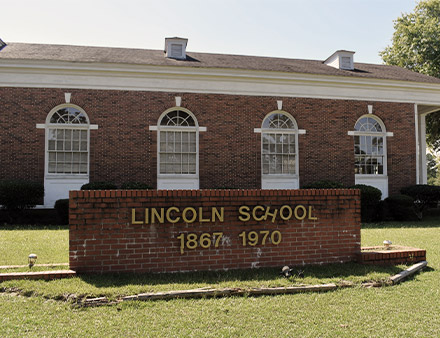
In the aftermath of the Civil War, a group of nine, the Marion Nine, former enslaved African American men, embarked on a mission to transform the lives of freedmen through education. In 1867, these men, driven by an unyielding commitment to uplift their community, incorporated the Lincoln Normal School in Marion, Alabama. Their efforts were bolstered by the American Missionary Association (AMA), a key ally in the struggle for educational equality. Lincoln would educate African American children for over a hundred years, including notable Alumni Mr. William Pettiford, Mr. Albert Turner, and Mrs. Coretta Scott King. In February 1965, students from Lincoln Normal School begin protesting the unjust treatment of Blacks in the community. Several students were arrested, along with Southern Christian Leadership Conference’s James Orange, one of the organizers of the student protests. Community members and students from Lincoln Normal School, would meet on February 18, 1965 to march to the Perry County Jail in support of Mr. Orange. Shortly after the march was started the marchers were attacked by an angry mob, in the resulting chaos Lincoln graduate and Army Veteran Mr. Jimmy Lee Jackson was shot, he would later die. Mr. Jackson’s death spurred over 4oo Foot Soldiers, many from Lincoln Normal School, on the first attempt to march from Selma to Montgomery on March 7, 1965, a day we now call, Bloody Sunday.
Learn More
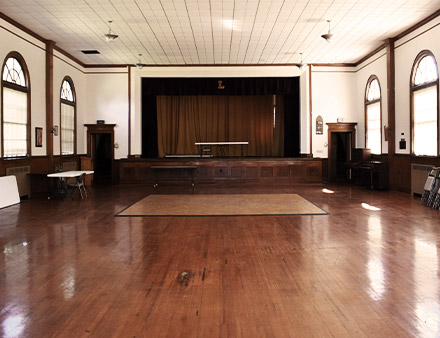
Established in 1867 as a school for freed slaves and their children, the school originally focused on educating high school graduates to be teachers. In 1887, a fire destroyed much of the campus, and the teacher training was relocated to Montgomery, where it eventually became Alabama State University. Lincoln Normal became known over the years for its large proportion of students who went to university and attained advanced degrees. In 1970, the school closed when the newly built and integrated Marion High School opened.
Students from Lincoln Normal School began marching for equality in late 1964 and early 1965. Led by James Orange and Albert Turner, the students regularly met for training in nonviolence. The students would enter one gate at the school and immediately exit a different gate to march to downtown Marion and lead peaceful protest, they were routinely arrested. Several Lincoln students were present the night of February 18, 1965, when peaceful protestors were attacked by an angry mob and Mr. Jimmie Lee Jackson was shot. Several current and former students on March 7, 1965 were beaten on the Edmund Pettus Bridge during Bloody Sunday and also marched the 54 mile trek from Selma to Montgomery from March 21, 1965 to March 25, 1965.
Established in 1869 by freed slaves and representatives of the American Missionary Association, First Congregational Church was constructed in 1871. It was built adjacent to the Lincoln Normal School campus and followed its founding. Over the years, the church and its congregation became known for its advocacy for freedom, justice and equity for all people.
Heard Cemetery has the graves of a number of enslaved and formerly enslaved people. Located more than three miles outside of Marion, it is the site where Jimmie Lee Jackson was buried. More than 900 people attended the funeral and walked from town to the cemetery, in the rain and cold to pay their last respects.
Perry County Jail was involved in multiple Civil Rights events that occurred in Marion, most notably the march to support James Orange. Orange was incarcerated in Perry County Jail, and a group at the Zion United Methodist Church planned to march and show their support. The jail was one block away from the church, but they were met by armed state troopers in crowd control gear. Street lights were cut and violence ensued. One of the victims of this march was Jimmie Lee Jackson, an unarmed participant, who was taken 30 miles to Good Samaritan Hospital to be treated, dying eight days later.
A major meeting place during the 1960s for protests and activism related to the Civil Rights Movement was Mt. Zion Church. One such gathering was held to protest the arrest and imprisonment of Rev. James Orange the night of Feb. 18, 1865. Members gathered at the church and attempted to leave to walk to the county jail, one block away. Protesters were met by an angry mob outside the church that night, who began beating them as they left the church.