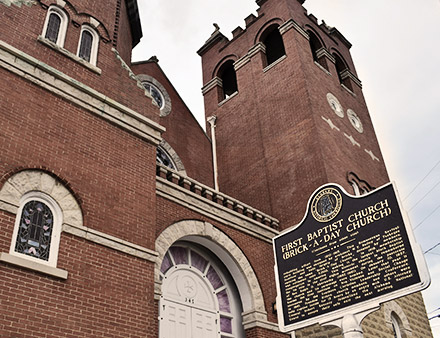
Home to the City of Montgomery, Montgomery County, Alabama, contains many cultural and historic sites including the Alabama Shakespeare Festival, the Montgomery Museum of Fine Arts, Dexter Avenue Baptist Church, the Alabama State Capitol, the Civil Rights Memorial, and the Rosa Parks Library and Museum. History was made several times here, and many of the events that caught the attention of the world are recalled still today. The area boasts a number of parks and green spaces, and the warm climate encourages sports and outdoor activities year-round.
People Who Shaped Montgomery County
Rosa Parks (1913 – 2005) was a 42-year-old seamstress and activist at the time of her famous arrest in 1955 for refusing to give up her seat on a Montgomery city bus. She sparked the beginning of a successful boycott and changed the world forever. Congress named her “the mother of the freedom movement” and “the first lady of civil rights.”
From the time of his pastorship of Dexter Avenue Baptist Church in the mid-1950s through the turbulent 1960s, Martin Luther King, Jr. (1929 – 1968) served at the leading voice of the American Civil Rights Movement. His legendary courage and commitment to nonviolent protest inspired a nation to put an end to legal segregation.
Ralph David Abernathy, Sr. (1926 –1990) was a Baptist minister and compatriot of Martin Luther King, Jr. He was a leader in the Montgomery bus boycott in 1955-56 and co-created the Southern Christian Leadership Conference (SCLC). He became its president after the assassination of Dr. King in 1968.
Places in Montgomery County
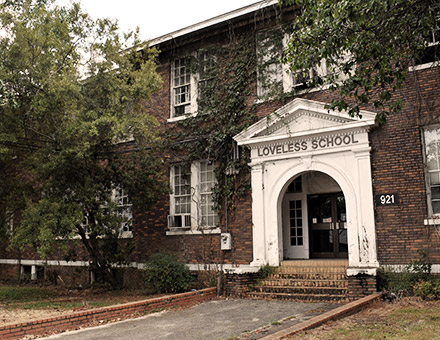
Founded in 1934 in Montgomery, Alabama, by Catholic priest Father Harold Purcell, the City of St. Jude included a church, hospital and high school with a mission to provide spiritual, health, education and social services regardless of race. In the early 1950s during a time of widespread segregation in the South, the hospital was the first in the region to integrate. In the evening of March 24, 1965 the City of St. Jude welcome marchers of the Selma to Montgomery March as the last stop and last of the four Campsites of the march. The next day, marchers led by Dr. Martin Luther King, departed the grounds of St. Jude and marched to the Alabama State Capital Building. A short 5 months later in August 1965, President Lyndon Johnson signed into law the Voting Rights Act of 1965.
Learn More
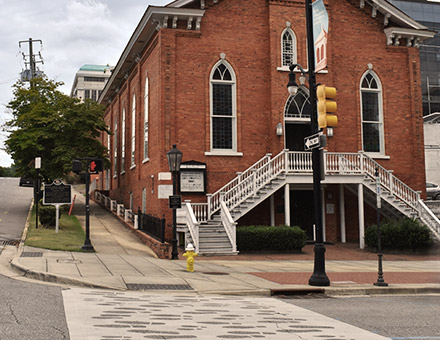
Made nationally famous in the mid-1950s as the unofficial headquarters of the Montgomery bus boycott, Dexter Avenue Baptist Church was designated as a National Historic Landmark in 1974. Mere steps away from the Alabama State Capitol, the congregation was led in the 1950s by Martin Luther King, Jr., who was propelled into the national scene during the Civil Rights Era.
Located on the Troy University Montgomery campus, the Rosa Parks Museum was built in her honor and houses artifacts and memorabilia associated with the Montgomery bus boycott of 1955-56. While recounting the story of Parks, the museum features an exact replica of the bus where she made her famous stand.
This memorial monument at 400 Washington Avenue lists the names of 41 martyrs of the Civil Rights Era, killed between 1955 and 1968. A fountain where water flows across the base of an inverted cone, the memorial quotes Amos 5:24: “Until justice rolls down like waters and righteousness like a mighty stream.”
The Mt. Zion African Methodist Episcopal (AME) Zion Church in Montgomery, Alabama was built in 1899 and has served the Black community of West Montgomery since it’s founding. The church played a significant role in the birth of the modern civil rights movement. After the arrest of Ms. Rosa Parks on Dec. 1, 1955, ministers and noted citizens of Montgomery gathered there and elected a young 26 years old minister, Dr. Martin Luther King Jr., to lead the Montgomery Improvement Association during a successful boycott of the city buses.
In 1965 during the Selma to Montgomery march, led by Dr. King, marchers turn left on what is now Fred Gray Avenue (Attorney Fred Gray was present at the 1955 meeting at Zion) and march right in front of Zion AME, the church provided refreshments and shelter to those marching to the state capital of Alabama.