Becoming Freedmen
After the Emancipation Proclamation and the end of the Civil War, formerly enslaved African people were pronounced “free” across much of the South. Freedmen, as the former slaves were known, were given certain rights, including the right to marry, own land, and bring cases to court, but were still not allowed to vote, serve on juries, testify against whites, or serve in a militia, thus their “freedom” was still controlled by their former slave owners. Even so, with these limited freedoms, the freedmen began to establish their own institutions and organizations.
Separate and Unequal
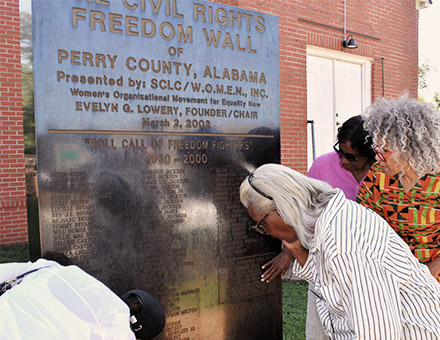
While white and black parts of town remained separated from each other, African Americans began to establish their own organizations and develop a growing middle class. Schools, churches, businesses and institutions such as infirmaries and hospitals were created by, staffed by, and served the black residents, and wealth began to be created and retained. But a ceiling was in place, and a white power structure that supported segregation and inequality still existed.
Tensions began to build as the African American community began to push up and against the limiting structure that evolved post-Civil War. The desire to achieve full equality and freedom with the white neighbors led to what became known as the struggle for Civil Rights.
A Bus Boycott Gains Attention
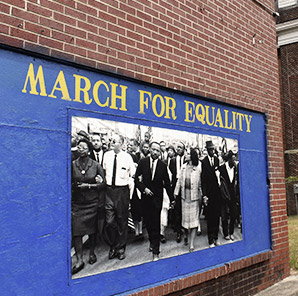
When Rosa Parks refused to give up her bus seat to a white man in Montgomery, Alabama, on December 1, 1955, she was arrested. Within days, a highly organized boycott began and its eventual leader, Martin Luther King, Jr., rose to prominence. Over the course of several months, the boycott succeeded in cutting into the bus line’s bottom line as thousands of African Americans walked or rode in carpools. The final blow to the City’s segregated busing law occurred November 13, 1956, when the U.S. Supreme Court ruled it unconstitutional.

Voting Rights are Civil Rights
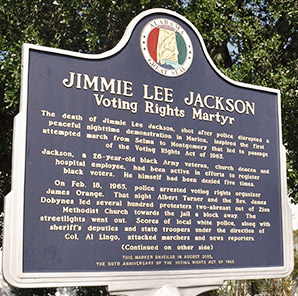
During the 1950s, the Federal Courts began chipping away at the edifice of segregation in the United States. Victories such as the Brown v. Board of Education decision in 1954 encouraged African Americans’ belief that the legal system would recognize them as first-class citizens. However, full participation in the American way of life would not be possible until they were guaranteed the critical right to vote. Only in this way could they help shape the laws that would usher in equality.